
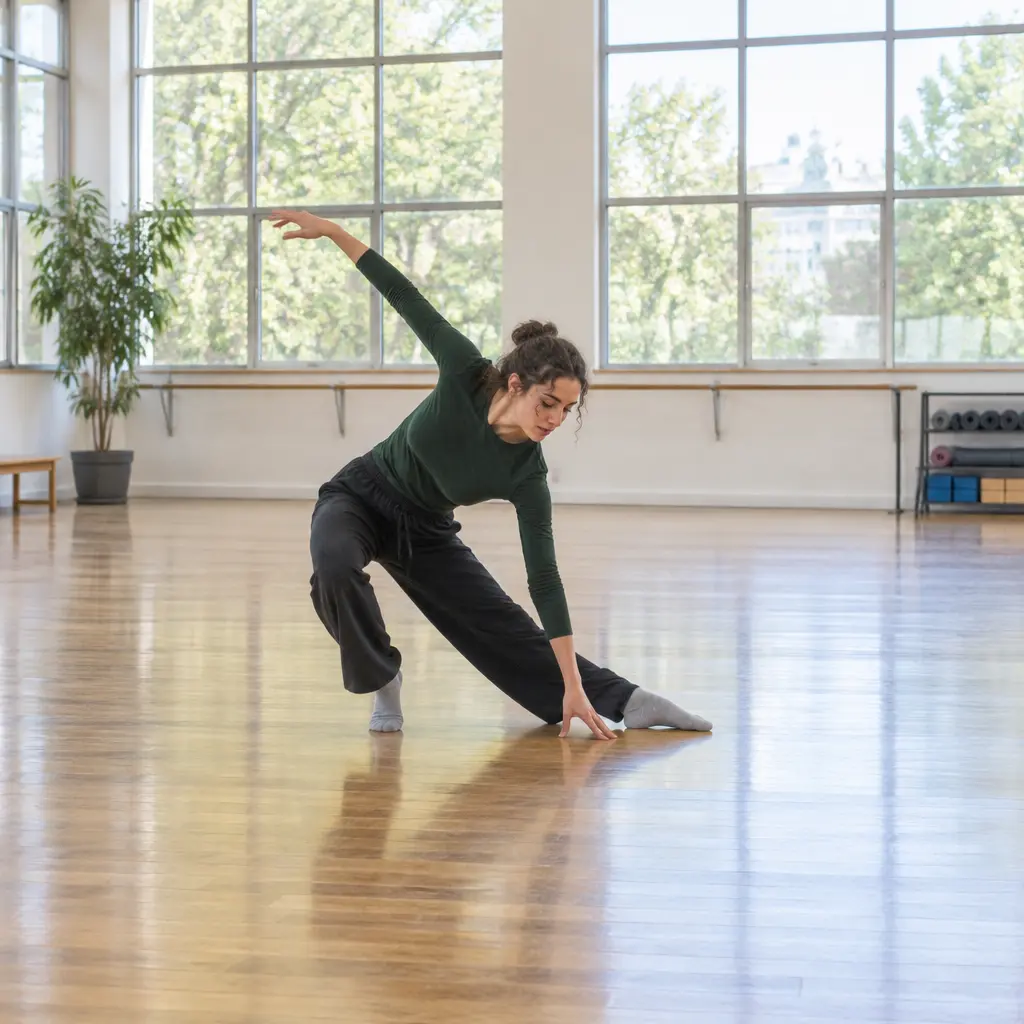
Contemporary dance is a broad, evolving performance practice that combines movement ideas from modern dance, ballet, improvisation, and other forms. Improving at it takes more than learning steps: it means developing body awareness, strength, musical responsiveness, expressive range, and the ability to practice safely. Dance medicine guidance from organizations such as the International Association for Dance Medicine & Science emphasizes conditioning, recovery, and injury prevention alongside technical training. The practical tips below explain how to build technique, use improvisation and musicality, strengthen performance skills, and measure progress without overtraining.
Build Contemporary Dance Technique Through Alignment and Control
Contemporary dance technique is a set of adaptable movement principles rather than one fixed vocabulary. Dance educators commonly describe it through efficient alignment, coordination, balance, use of gravity, and transitions between levels and movement qualities. Because styles differ between teachers and choreographers, a strong foundation helps dancers adapt without forcing every movement into a single “correct” shape.
Develop alignment and body awareness
Alignment means organizing the body so joints and muscles can support movement efficiently. In class, notice how your head, rib cage, pelvis, knees, and feet relate while standing, turning, or moving to the floor. Use a mirror occasionally, but also practice sensing where your weight is and whether you can breathe freely. If a position causes sharp pain, numbness, or persistent strain, stop and ask a qualified instructor or health professional for guidance.
Practice transitions, not only shapes
Contemporary choreography often gains its character from how one action becomes another. Practice moving from standing to kneeling, rolling, and rising at several speeds. Repeat a short phrase while changing the pathway, direction, or level, and aim for clear initiation and controlled arrival. This makes floorwork and traveling movement more connected rather than a series of isolated poses.
Use feedback to refine movement
Feedback helps reveal habits that are difficult to notice from inside the movement. Ask a teacher one specific question, such as whether your weight shifts clearly before a turn or whether your landing is quiet. Short video recordings can help you compare attempts, but review them for one or two goals at a time instead of judging your entire performance.
Improve Contemporary Dance Strength, Mobility, and Stamina
Physical preparation supports dynamic movement, sustained control, and safer landings. The International Association for Dance Medicine & Science recommends treating dancers as athletes and balancing dance training with appropriate conditioning and recovery. Strength and mobility work should complement class, not leave you exhausted before it begins.
Build strength for control and landings
Strength is the ability to produce and control force. Include exercises for the legs, hips, trunk, and upper body, such as squats, calf raises, bridges, and modified planks, choosing versions suited to your experience. Prioritize steady technique over high repetitions. For jumps and falls, practice absorbing force with coordinated bending through the ankles, knees, and hips rather than landing stiffly.
Train mobility without forcing range
Mobility combines usable joint range with strength and control. Warm up with easy movement before attempting deeper stretches, and avoid pushing into painful positions or bouncing forcefully. A dancer does not need extreme flexibility to move expressively; the useful goal is range that can be entered and exited with control. If you have a history of injury or joint instability, seek individualized advice before adding intensive flexibility work.
Plan stamina and recovery
Stamina lets you sustain movement quality through a class or performance. Build it gradually by repeating phrases or taking classes at a manageable pace, then allow recovery between demanding sessions. The U.S. Centers for Disease Control and Prevention advises adults to aim for at least 150 minutes of moderate-intensity aerobic activity weekly, plus muscle-strengthening activity on two days; this is a general public-health benchmark, not a dance-specific prescription. Dancers should adapt activity to their training load, health, and professional guidance.
Develop Contemporary Dance Musicality and Improvisation
Musicality is the ability to make movement choices in relation to sound, silence, rhythm, and phrasing. Improvisation is the practice of creating movement in the moment within a prompt, structure, or set of choices. Together, they help dancers respond to choreography with intention rather than simply reproducing counts.
Listen beyond the beat
Try dancing to more than the obvious pulse. Notice changes in texture, volume, breath, instrumentation, and silence. Repeat one phrase while moving on the beat, against it, and through the spaces between beats. You can also practice without music and let breath or imagined sound shape timing. These variations expand your rhythmic choices and make familiar choreography feel more deliberate.
Use constraints to guide improvisation
A constraint gives improvisation a manageable focus. For example, improvise using only one body part to initiate movement, change levels without using your hands, or travel in a curved pathway. Work for one or two minutes, then note which choices felt clear and which felt habitual. This approach turns open-ended exploration into repeatable practice.
Connect movement choices to intention
Expression becomes more specific when movement has an intention, image, or relationship behind it. Before repeating a phrase, choose a simple prompt such as resisting, reaching, or listening. Keep the movement physically safe and avoid relying on facial expression alone; intention can also appear through timing, focus, weight, and the direction of energy.
Strengthen Contemporary Dance Performance and Practice Habits
Consistent practice works best when it is focused, observable, and sustainable. The U.S. National Institutes of Health’s National Institute of Arthritis and Musculoskeletal and Skin Diseases identifies gradual conditioning and attention to pain as important elements of physical activity. For dancers, a thoughtful routine can improve learning while reducing the temptation to push through warning signs.
Set measurable, short-term goals
Choose goals that describe an action you can observe, such as completing a phrase with clearer weight shifts or maintaining balance through a specified turn sequence. Break a difficult skill into smaller parts, practice each part slowly, and then reconnect them. Record what you worked on and what you will try next time. Progress may be uneven, so compare your work over weeks rather than expecting every session to feel better.
Warm up and cool down thoughtfully
A warm-up prepares the body for the demands of class through gradually increasing movement, while a cool-down allows activity to decrease in a controlled way. Begin with gentle locomotion and joint movement, then progress toward the speed and range required in class. Afterward, walk or move easily and reflect on any discomfort. A warm-up should not be treated as a guarantee against injury, but it helps avoid jumping into demanding movement cold.
Choose classes and choreography that support growth
A productive learning environment offers challenge, clear instruction, and room for questions. Take classes at a level where you can engage with the material without repeatedly losing control, and tell the instructor about relevant limitations or injuries. Watching performances and learning repertory can also broaden your movement vocabulary. When studying a choreographer’s work, notice its movement qualities and structure rather than copying a shape without understanding its context.
Conclusion: Make Contemporary Dance Improvement Consistent and Sustainable
Improving contemporary dance skills means combining technique, physical preparation, musicality, improvisation, and reflective practice. Work on alignment and transitions, build strength and mobility gradually, explore sound and movement constraints, and set small goals you can assess. Treat pain and recovery seriously, and seek qualified guidance when needed. Choose one focus for your next class, practice it with attention, and keep a brief record of what you learn; steady, sustainable effort is more useful than rushing toward a single ideal of progress.
Sources: International Association for Dance Medicine & Science, “Resources for Dancers,” https://iadms.org/resources/; U.S. Centers for Disease Control and Prevention, “Adult Activity: An Overview,” https://www.cdc.gov/physical-activity-basics/guidelines/adults.html; National Institute of Arthritis and Musculoskeletal and Skin Diseases, “Exercise and Physical Activity,” https://www.niams.nih.gov/health-topics/exercise-and-physical-activity