
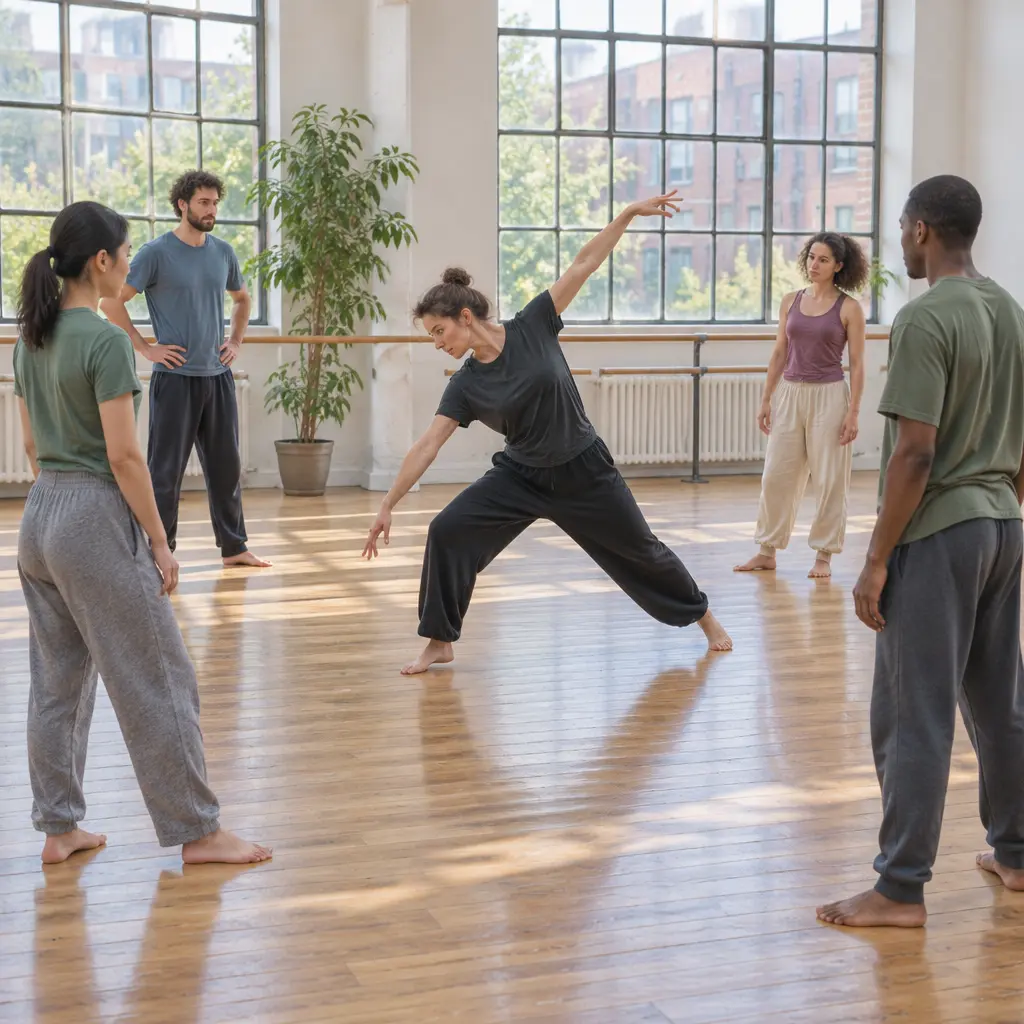
Contemporary dance is a diverse, evolving form of performance that blends movement traditions and responds to the ideas, identities, and conditions of its time. Its role in modern culture extends beyond entertainment: it gives artists and communities ways to explore social questions, preserve and transform movement knowledge, and create shared experiences. This article considers how contemporary dance is defined, how it develops through artistic and cultural exchange, and what its public, educational, and economic significance looks like—while recognizing that no single statistic can capture its full impact.
Contemporary Dance as a Cultural Practice
“Contemporary dance” is an umbrella term rather than a single codified technique. It generally describes dance made in the present, shaped by current artistic questions and often drawing on multiple movement vocabularies. The term can refer to concert works, site-specific performances, improvisation, community projects, and dance made for digital platforms. These forms differ in style, but share an emphasis on artistic inquiry and on the relationship between movement, bodies, space, and audience.
The National Endowment for the Arts describes dance as both an art form and a means of cultural expression in its research and arts-participation reporting. That dual role helps explain why contemporary dance matters: a work may be formally experimental while also reflecting histories, social tensions, or community identities. As a bridge between artistic invention and public life, the form connects several related practices.
A plural and changing vocabulary
Contemporary dance is characterized by variety rather than one universal movement system. Choreographers may combine release-based technique, ballet, modern dance, street and club styles, folk traditions, martial arts, gesture, or everyday movement. Improvisation and collaboration can be central, and works may be staged in theaters, galleries, public spaces, or online. These choices allow artists to question conventional ideas about virtuosity, authorship, and what counts as dance.
The term also requires care: “contemporary” does not mean culturally neutral or detached from history. Movement practices carry specific lineages, and borrowing from them raises questions of attribution, power, and respect. An informed account identifies influences and collaborators rather than treating diverse traditions as interchangeable material.
From modern dance to contemporary practice
Contemporary dance has roots in earlier modern-dance movements that challenged the conventions of ballet and developed new approaches to bodily expression. Over the twentieth century, choreographers expanded those experiments through abstraction, chance methods, pedestrian movement, interdisciplinary performance, and new relationships between music and motion. Contemporary work continues this history, but it is not simply a later name for modern dance: it reflects a wider and continually changing field of practices.
This historical layering is visible in the work of artists and companies that combine formal experimentation with recognizable cultural references. The result is a field in which technique can be transmitted, revised, or deliberately resisted. That openness leads directly to dance’s importance as a form of cultural expression.
Contemporary Dance and Identity, Memory, and Social Commentary
Contemporary dance can make cultural meanings visible through bodies, gestures, music, costume, and the use of space. Dance scholar Susan Leigh Foster has examined how choreography produces and communicates ideas about bodies and social relations; this perspective helps explain why movement can carry meaning even without spoken language. A performance may address race, gender, migration, disability, labor, or collective memory, though its interpretation depends on its artistic context and audience.
Identity and representation
Identity-focused choreography explores how individuals and groups experience belonging, visibility, and difference. Artists may draw on personal histories or community movement practices, while casting and staging can challenge assumptions about whose bodies are considered expressive or technically accomplished. Representation is not only a matter of who appears onstage; it also involves who makes decisions, receives resources, and is credited for artistic knowledge.
These questions are relevant to arts institutions as well as individual works. The National Endowment for the Arts’ Survey of Public Participation in the Arts tracks participation across arts activities, providing a national context for studying access and engagement. Such surveys do not measure the meaning of any single performance, but they can help researchers and organizations identify participation patterns and barriers.
Memory, heritage, and cultural exchange
Dance can preserve and reinterpret heritage by transmitting movement, music, and stories between generations. Contemporary choreographers may work with traditional forms not as museum pieces, but as living practices that can change through migration, new technologies, and dialogue with other art forms. Responsible cultural exchange involves research, collaboration, acknowledgement, and attention to the communities from which a practice comes.
The UNESCO Convention for the Safeguarding of the Intangible Cultural Heritage recognizes dance and related performing practices as forms of living heritage. Its framework emphasizes transmission and community participation. This is useful context for contemporary dance because innovation and preservation are not necessarily opposites: artists can create new work while engaging thoughtfully with inherited knowledge.
Embodied social commentary
Socially engaged dance uses movement to investigate public concerns, from political violence and environmental change to care, work, and inequality. Rather than presenting an argument in the manner of an essay, choreography can make relationships and tensions perceptible through rhythm, repetition, proximity, or physical effort. The audience may encounter an issue through sensation and attention before interpreting it in words.
For example, site-specific works can respond to the histories of a neighborhood or building, while participatory projects invite residents to contribute movement and testimony. These approaches can encourage dialogue, but they should not be treated as automatic solutions to social problems. Their value depends on artistic quality, meaningful collaboration, and the circumstances in which they are presented.
Contemporary Dance in Education, Well-Being, and Community Life
Contemporary dance contributes to modern culture not only through professional performance, but also through classes, schools, community organizations, and informal participation. Dance education can develop coordination, musical awareness, creative decision-making, and collaboration. Community programs may also create opportunities for people to move together across age groups and backgrounds, although access depends on affordability, facilities, inclusive teaching, and cultural relevance.
Learning through movement
Dance education combines physical practice with observation, interpretation, and composition. Students learn to control movement, respond to rhythm and space, and make choices about how to communicate an idea. The National Dance Education Organization’s standards describe dance learning through creating, performing, responding, and connecting—an approach that treats students as makers and interpreters, not only as performers copying steps.
These skills can complement other forms of learning by asking students to solve problems physically and collaboratively. A class might explore balance and force, compose movement from a poem, or compare how different choreographers use repetition. Such activities connect bodily knowledge with reflection and cultural understanding.
Participation, health, and inclusion
Dance is a form of physical activity, but its health effects vary with intensity, duration, instruction, and individual circumstances. The World Health Organization’s 2020 guidelines recommend that adults accumulate 150 to 300 minutes of moderate-intensity aerobic activity, or 75 to 150 minutes of vigorous-intensity activity, per week, alongside muscle-strengthening activity. Dance may contribute to movement goals when practiced at an appropriate intensity, but it is not a substitute for individualized medical advice.
Inclusive practice considers differences in mobility, sensory experience, age, and prior training. Adaptive dance and integrated companies broaden who can participate and how movement is understood. Accessibility may involve welcoming teaching methods, step-free venues, relaxed performances, captioning, or alternative ways to engage. These measures strengthen the cultural role of dance by expanding both the people who make it and those who can experience it.
Community-based practice
Community dance projects connect choreography with local relationships and public spaces. A project might invite residents to contribute stories, create a performance in a shared venue, or offer regular classes outside traditional arts institutions. The National Endowment for the Arts’ arts-participation research provides a framework for considering how people encounter and take part in the arts, while local evaluations can reveal who is served and what barriers remain.
A useful evaluation looks beyond attendance numbers. It can ask whether participants helped shape the work, whether the program was accessible, and whether relationships continued after the performance. These measures help distinguish a short-lived outreach event from sustained cultural participation.
Contemporary Dance in the Digital and Economic Landscape
Digital platforms have changed how dance is made, taught, documented, and circulated. Video can extend a performance beyond its original venue, while social platforms allow short choreography to travel rapidly across borders. At the same time, screen-based circulation raises questions about consent, credit, compensation, editing, and the loss of qualities—such as scale and shared physical presence—that are specific to live performance.
Digital distribution and new audiences
Online dance ranges from professionally filmed stage works to livestreamed classes and user-created choreography. These formats can reduce geographic barriers and support teaching or archival access. They also make dance visible in spaces where audiences may encounter it outside theaters, including social media feeds and video-sharing platforms.
Digital reach should not be confused with equitable access. Device availability, internet quality, captions, platform algorithms, and creator compensation all affect who can participate and whose work is discoverable. The International Telecommunication Union’s connectivity data offers broader context on unequal access to digital services, while dance organizations can assess the specific reach and accessibility of their own online programs.
Employment and the creative economy
The dance economy includes performers, choreographers, teachers, rehearsal directors, designers, technicians, producers, venue staff, and many other workers. Employment may combine contracts, teaching, touring, project grants, and freelance work, making professional life less straightforward than a single job title suggests. The U.S. Bureau of Labor Statistics tracks employment and wage information for dancers and choreographers, but its occupational categories cannot represent every role or the full range of project-based work in the field.
Economic sustainability shapes artistic possibility. Rehearsal space, fair pay, health coverage, touring support, and long-term funding influence whether artists can develop work and whether organizations can retain skilled workers. Audiences can support the ecosystem by attending performances, paying for classes, and following local arts organizations; funders and policymakers can strengthen it through sustained support and transparent labor practices.
A practical example: live and online performance
A company presenting a new work both in a theater and through a digital recording illustrates how contemporary dance operates across cultural settings. The live version offers shared time, spatial detail, and immediate audience response. The recorded version can reach viewers who cannot travel, provide an archive, and support later discussion or study. A thoughtful presentation treats these as related but distinct experiences, securing permissions and crediting artists in both formats.
This example also shows why access, artistic form, and economics are connected. Filming requires additional labor and resources; online availability can widen reach but may not generate revenue on its own. Planning for both versions from the outset can help organizations address accessibility, rights, and compensation rather than treating digital distribution as an afterthought.
Conclusion: The Continuing Cultural Role of Contemporary Dance
Contemporary dance is a plural, evolving art form whose cultural role spans artistic experimentation, identity and memory, social commentary, education, community participation, digital exchange, and employment. Its importance lies partly in its capacity to communicate through embodied experience and partly in the institutions and relationships that make that experience possible. Research from the NEA, UNESCO, the WHO, the ITU, and the U.S. Bureau of Labor Statistics supplies useful evidence about participation, heritage, physical activity, connectivity, and work, though each source measures only one part of a larger cultural picture.
Readers can engage further by attending local performances, exploring dance education programs, learning about the movement traditions behind a work, and supporting accessible, fairly resourced arts organizations. Teachers, presenters, and policymakers can strengthen the field by widening participation, crediting cultural knowledge responsibly, and investing in the people who create and sustain dance.
Sources: National Endowment for the Arts, Survey of Public Participation in the Arts, https://www.arts.gov/impact/research/publications/2022-survey-public-participation-arts; Susan Leigh Foster, Reading Dancing: Bodies and Subjects in Contemporary American Dance, University of California Press, https://www.ucpress.edu/books/reading-dancing/paper; UNESCO, Convention for the Safeguarding of the Intangible Cultural Heritage, https://ich.unesco.org/en/convention; National Dance Education Organization, National Core Arts Standards in Dance, https://www.ndeo.org/Learn/Standards; World Health Organization, WHO Guidelines on Physical Activity and Sedentary Behaviour, https://www.who.int/publications/i/item/9789240015128; International Telecommunication Union, Facts and Figures 2023, https://www.itu.int/itu-d/reports/statistics/facts-figures-2023/; U.S. Bureau of Labor Statistics, Occupational Outlook Handbook: Dancers and Choreographers, https://www.bls.gov/ooh/entertainment-and-sports/dancers-and-choreographers.htm.