
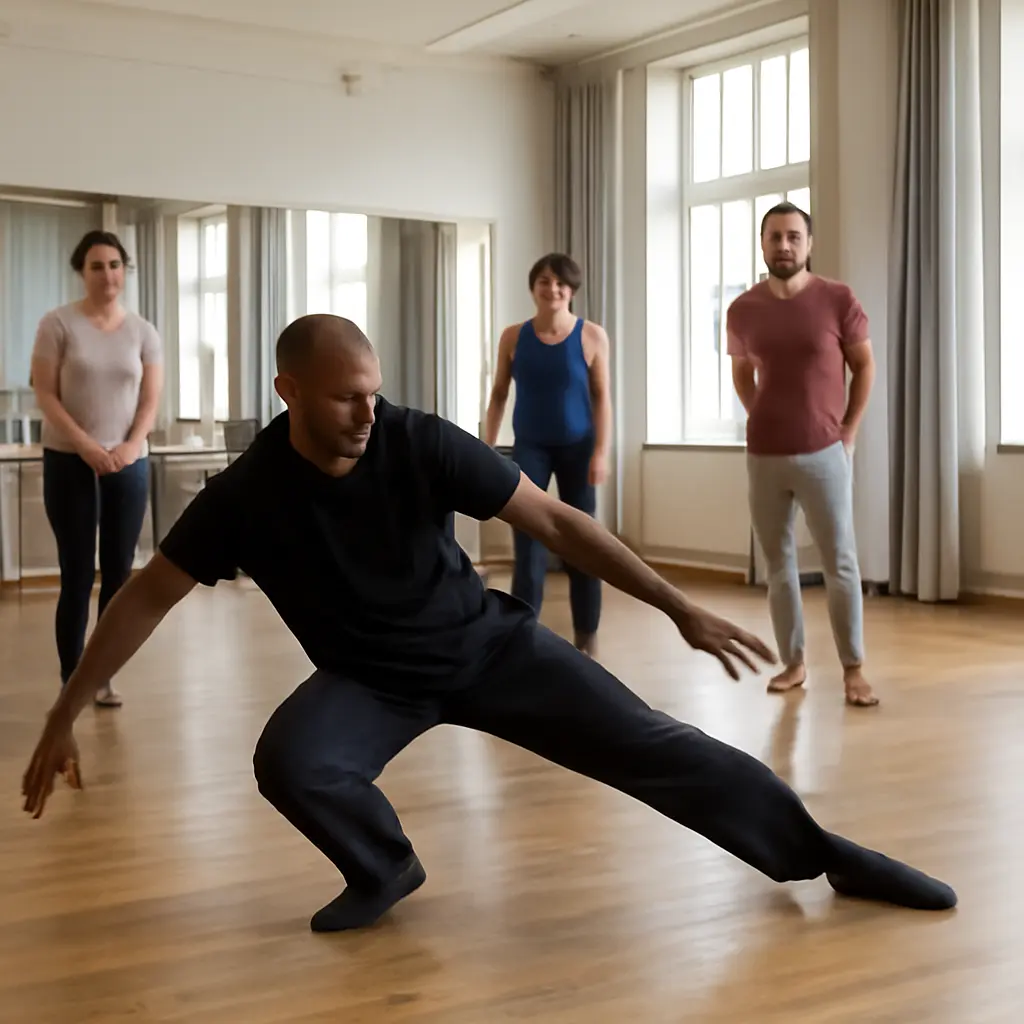
Modern dance is a broad family of concert-dance practices that developed in the late 19th and early 20th centuries as artists challenged the formal vocabulary and conventions of classical ballet. Its history is not a single movement but a series of innovations—from Isadora Duncan’s expressive freedom and Martha Graham’s dramatic technique to postmodern experimentation and today’s hybrid forms. Understanding modern dance means tracing its artistic principles, influential choreographers, changing social context, and continuing effects on performance, education, and popular culture.
Modern Dance: Development and Influence
Modern dance reshaped Western concert dance by treating movement as a means of personal, emotional, and social expression rather than relying solely on ballet’s established steps and aesthetics. The term is often used broadly, though historians distinguish early modern dance, later modern-dance techniques, postmodern dance, and contemporary dance. These categories overlap: each generation adopted, questioned, or transformed the practices that came before it.
The change mattered beyond the stage. Modern dance opened new possibilities for choreographers and performers, influenced dance education and theater, and helped make movement a vehicle for examining identity, politics, and everyday life. Its development also reflects barriers and inequalities in the arts: pioneering Black choreographers, including Katherine Dunham and Pearl Primus, expanded the field while confronting racism and exclusion. The sections below examine modern dance’s defining features, historical development, major branches, and lasting influence.
Modern Dance’s Core Attributes and Definitions
Modern dance is best understood as an evolving approach to choreography and performance, not as one fixed technique. The National Museum of American History describes modern dance in connection with artists’ rejection of ballet’s rigid rules and their search for more personal forms of expression. In practice, modern dance has encompassed diverse movement systems, performance settings, music choices, and artistic aims.
Its characteristic ideas include expressive movement, experimentation with the body’s relationship to gravity, and the possibility of dancing without ballet’s conventional narrative or vocabulary. Modern dance also developed through identifiable branches, including the early expressive work of Isadora Duncan, the techniques associated with Martha Graham and Doris Humphrey, the culturally grounded work of Katherine Dunham, and the experimental approaches that informed postmodern dance.
Expressive Movement and Artistic Independence
Expressive movement places the dancer’s physical experience and artistic intention at the center of the work. Early modern dancers often favored gestures, grounded steps, and flowing movement over ballet’s pointe work, formal turnout, and codified positions. Their innovations did not amount to a wholesale rejection of ballet; rather, they questioned the idea that one inherited technique should define what dance could be.
Isadora Duncan became a key figure in this shift. Her performances drew on natural movement, music, and an idealized vision of ancient Greece, and she danced in loose garments rather than traditional ballet costumes. The Library of Congress identifies Duncan as an influential American dancer whose work helped establish modern dance. Her example encouraged later artists to develop personal movement languages and to treat choreography as an individual artistic statement.
Gravity, Breath, and the Moving Body
Modern-dance techniques often explore how a body yields to, resists, or redirects gravity. Falling, recovering, contracting, releasing, and using the floor can become deliberate choreographic choices. These approaches contrast with ballet’s frequent emphasis on elevation and sustained verticality, although modern and ballet practices have influenced one another throughout dance history.
Martha Graham’s technique made contraction and release central to both training and expression. Doris Humphrey’s approach, often described through the principle of “fall and recovery,” investigated balance and the body’s negotiation with gravity. These are not universal rules for modern dance; they are influential examples of how choreographers built techniques around specific physical and expressive principles.
Experimentation Across Music, Space, and Subject
Modern choreographers broadened the possible relationships among movement, music, design, and story. A work might use a musical score as its structure, treat sound as an independent element, or place movement in silence. Choreographers also varied stage design and subject matter, moving from myth and psychological drama to abstraction, social experience, and ordinary activity.
This experimental outlook prepared the way for postmodern dance, whose artists questioned whether dance required virtuosity, a conventional stage, or a clear narrative. That transition illustrates a recurring pattern: modern dance established artistic freedom as a principle, while later practitioners tested how far that freedom could extend.
Modern Dance’s Historical Development
Modern dance developed through distinct but interconnected periods. Early innovators challenged established performance norms; mid-20th-century choreographers built techniques and institutions; and later artists examined the boundaries of choreography itself. These stages were shaped by international exchange and by the social conditions of their time, including migration, changing roles for women, and struggles over race and representation.
Early Innovators and the First Modern-Dance Wave
In the late 19th and early 20th centuries, performers including Isadora Duncan, Loïe Fuller, and Ruth St. Denis pursued alternatives to conventional ballet. Duncan emphasized expressive, flowing movement; Fuller became known for performance effects involving fabric and lighting; and St. Denis drew inspiration from her interpretations of Asian and Middle Eastern cultures. Their work helped establish a public identity for dance as an independent modern art.
These artists worked in a period of rapid change in performance, technology, and public culture. Their approaches differed, and not all of their representations of other cultures were accurate or free from appropriation. A historical account therefore recognizes both their innovation and the need to examine how cultural material was selected, interpreted, and presented.
Technique, Company, and Institutional Growth
From the 1920s through the mid-20th century, modern dance developed more formal techniques and durable institutions. Martha Graham, Doris Humphrey, and José Limón created influential movement systems and repertories. Companies and schools gave dancers opportunities to train, perform, and pass techniques to later generations.
Graham’s work often addressed psychological and mythic themes; Humphrey explored group composition and the expressive possibilities of balance; and Limón developed a technique emphasizing breath, weight, and the dynamics of falling and recovery. These artists show how modern dance could become codified without losing its commitment to invention. Their techniques remain part of professional dance training, although instructors and performers adapt them in different ways.
Black Modern Dance and Cultural Exchange
Black modern dance is an essential part of the art form’s history, not a peripheral addition. Katherine Dunham combined modern dance with research into Caribbean and African diasporic dance traditions, creating a distinctive technique and choreographic approach. Pearl Primus drew on African diasporic movement and social themes, while choreographers such as Alvin Ailey later brought Black experience and cultural memory to major stages.
The Smithsonian’s National Museum of African American History and Culture documents the importance of Black artists to American dance. Their work expanded the movement vocabularies and subjects represented in concert dance, while their careers also reveal the effects of segregation and unequal access to institutions. The Alvin Ailey American Dance Theater, founded in 1958, became an enduring example of a company presenting repertory grounded in African American experience while reaching broad audiences.
Postmodern Dance and the Challenge to Convention
Postmodern dance emerged in the 1960s as artists questioned the conventions that modern dance itself had established. Choreographers associated with the Judson Dance Theater, including Yvonne Rainer, explored ordinary actions, improvisation, task-based movement, and nontraditional performance spaces. Some works minimized theatrical display or rejected the assumption that a trained dancer’s virtuosity was necessary for choreography.
Yvonne Rainer’s 1965 “No Manifesto” famously rejected spectacle, virtuosity, and conventional theatrical effects. This did not end modern dance; it broadened the debate over what could count as dance. Postmodern experimentation also influenced later contemporary choreography, performance art, and interdisciplinary work.
Modern Dance’s Influence on Performance and Society
Modern dance’s influence reaches beyond its own repertory. It changed expectations of choreography, performance, and dancer training, and it contributed movement ideas to theater, film, education, and popular culture. Its legacy is visible both in techniques that remain teachable and in the broader principle that movement can communicate ideas without following a single formal standard.
Influence on Contemporary Dance and Performance
Contemporary dance draws on modern dance, ballet, postmodern experimentation, and many other movement traditions. The label does not describe one unified technique. Instead, it often refers to current choreography that combines or reworks multiple approaches, including floor work, improvisation, release-based movement, and theatrical or multimedia elements.
Modern dance helped make this plurality possible by legitimizing experimentation. Contemporary choreographers may use Graham-based movement, ballet training, social dance, or digital media within the same work. The result is not a simple replacement of modern dance but an ongoing conversation with its methods and history.
Education, Training, and Community Practice
Modern dance techniques became part of professional and academic training, influencing how dancers learn alignment, coordination, improvisation, and choreographic composition. University dance programs and studios teach historical techniques alongside newer practices, helping students understand that technique carries artistic and cultural assumptions as well as physical skills.
Community and educational programs also use dance for creative participation and cultural expression. The National Endowment for the Arts reports on arts participation and arts education in the United States, providing evidence of the wider public role of arts activity. Such survey measures cover multiple art forms, so they should not be mistaken for a count of modern-dance participants alone.
Representation, Identity, and Social Commentary
Modern dance has given choreographers tools to address identity, memory, politics, and social change through embodied performance. Rather than relying only on spoken language, dance can communicate through gesture, rhythm, space, and physical relationships. Artists have used these elements to represent personal experience and to question whose stories are visible onstage.
The history is neither uniformly inclusive nor free from controversy. Black artists and other underrepresented communities have often had to challenge institutional barriers while contributing significantly to the field. Studying modern dance therefore involves examining both aesthetic innovation and the structures that shaped who could train, perform, receive recognition, and control cultural representation.
Modern Dance in Practice: Examples and Evidence
Specific artists and institutions make the development of modern dance easier to understand. Their work shows how a movement principle can become a technique, how a repertory can carry cultural memory, and how experimentation can alter the definition of performance.
Martha Graham’s Technique and Repertory
Martha Graham’s technique translates physical actions—especially contraction and release—into a system for training and choreographic expression. Her repertory includes works shaped by myth, history, and psychological drama. The Martha Graham Dance Company, founded in 1926, is recognized as one of the oldest continuously operating dance companies in the United States, illustrating how an individual artistic approach can develop into a lasting institution.
Graham’s example demonstrates a central tension in modern dance: artists sought freedom from inherited conventions, yet their innovations could themselves become codified and taught. That process helped preserve repertory and technique, while later artists remained free to reinterpret or challenge them.
Katherine Dunham’s Research and Technique
Katherine Dunham joined choreography and performance with sustained study of Caribbean dance and culture. Her approach incorporated movement traditions from the African diaspora into concert dance and training, making cultural research a visible part of her artistic practice. The Katherine Dunham Technique continues to be taught, and Dunham’s career demonstrates the importance of understanding the cultural sources of movement rather than treating them as interchangeable styles.
Dunham’s influence also offers a case study in the relationship between artistic innovation and public representation. Her work challenged narrow ideas about what belonged on the concert stage, while her scholarship and performance brought attention to traditions that had often been marginalized in mainstream dance institutions.
Alvin Ailey and “Revelations”
Alvin Ailey’s “Revelations,” first performed in 1960, is a major example of modern dance drawing on African American spiritual traditions and lived experience. The work uses music, gesture, and ensemble movement to evoke themes of faith, struggle, and communal life. Its continued performance by the Alvin Ailey American Dance Theater illustrates how a work can preserve cultural memory while remaining part of a living repertory.
Ailey’s example underscores why historical context matters: modern dance is not only a record of stylistic change but also a means by which artists have represented communities and histories. For an accompanying visual, a timeline chart could show key periods from early modern dance through postmodern experimentation and contemporary practice; a second chart could compare major techniques by their movement principles, while noting that no chart can capture the full diversity of each artist’s work.
Conclusion: Modern Dance’s Continuing Significance
Modern dance developed through expressive independence, physical experimentation, and the creation of distinct techniques and institutions. Its history includes early innovators such as Isadora Duncan, technique-builders such as Martha Graham and Doris Humphrey, culturally influential artists such as Katherine Dunham and Alvin Ailey, and postmodern choreographers who questioned the conventions of performance.
Its influence persists in contemporary choreography, dance education, and the use of performance to explore identity and social experience. Modern dance is important not because it settled on one definitive style, but because it expanded the possibilities of movement and kept those possibilities open to debate. Readers can explore the archives and repertory of dance companies, study the work of historically underrepresented choreographers, or attend a live performance and consider how movement communicates meaning.
Sources: National Museum of American History, “Modern Dance,” https://americanhistory.si.edu/; Library of Congress, “Isadora Duncan,” https://www.loc.gov/; Martha Graham Dance Company, “About,” https://marthagraham.org/about/; National Museum of African American History and Culture, “Dance,” https://nmaahc.si.edu/explore/stories/dance; Alvin Ailey American Dance Theater, “Revelations,” https://www.alvinailey.org/performances/repertory/revelations; National Endowment for the Arts, “Arts Participation Patterns in 2022,” https://www.arts.gov/impact/research/arts-data-profile-series/adp-31