
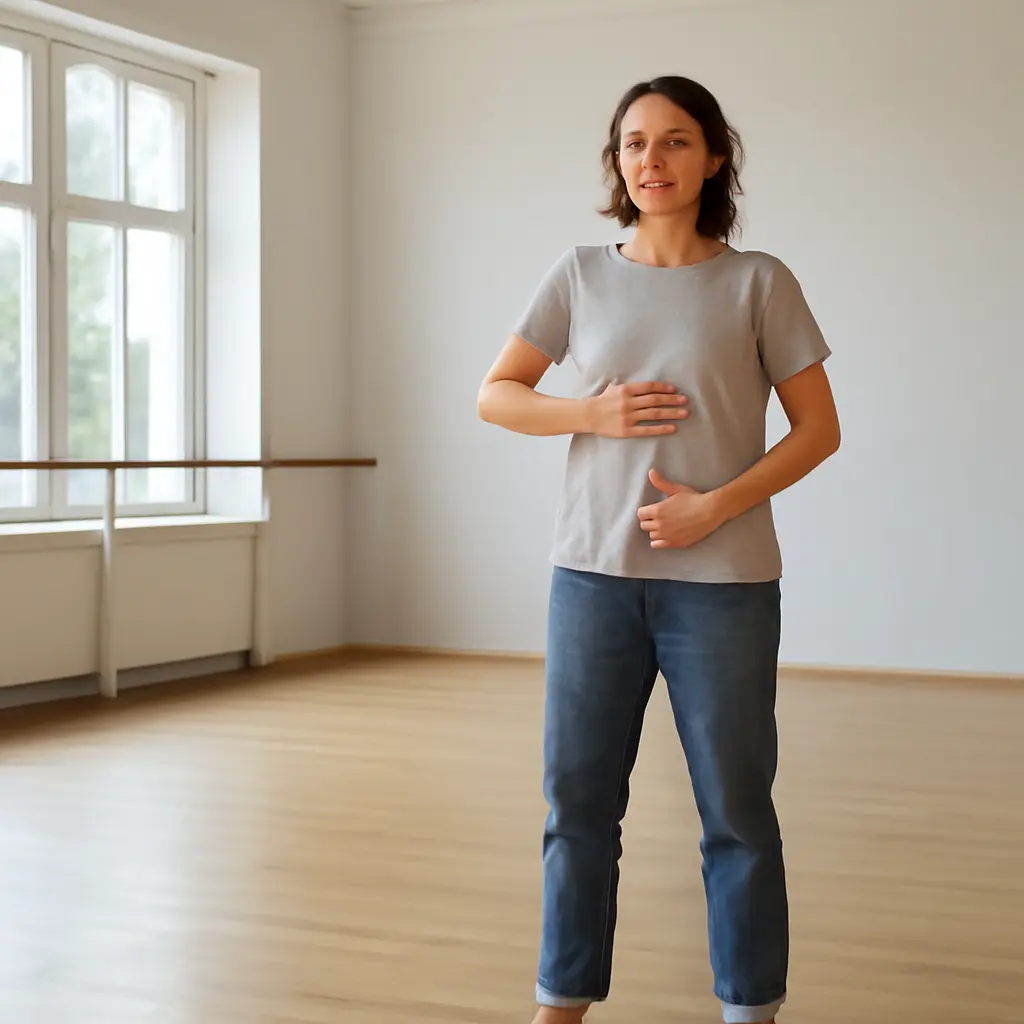
Breathing into movement means coordinating the breath with muscular effort, release, and attention so that motion feels more intentional and expressive. In dance and other movement practices, contraction—a deliberate drawing inward of the torso or limbs—can sharpen rhythm, communicate emotion, and make changes in energy easier to perceive. Breath is not simply decoration: respiratory research shows that breathing and movement are mechanically and neurologically linked, while dance-science research indicates that choreographed breathing patterns can influence perceived effort and performance. Five useful ways contraction deepens expression are by clarifying rhythm, shaping emotional contrast, focusing attention, strengthening whole-body coordination, and creating meaningful release. The goal is not to force a particular breath, but to explore how breath supports safe, communicative movement.
Breath and Contraction: How the Movement Attribute Works
Breath-led contraction is a movement strategy in which a person coordinates an inward muscular action with breathing—often, but not invariably, with an exhale. In his account of modern dance technique, choreographer and teacher Erick Hawkins described breath as integral to the organization of movement rather than an accessory added afterward. There is no single universal rule that every contraction must occur on an exhale: choreography, anatomy, intensity, and individual comfort all matter.
A contraction may involve the abdominal wall and torso, a smaller action such as curling the hands, or a whole-body gathering of energy. Its related movement categories include release, suspension, expansion, and recovery. These contrasts matter because expression often comes from the transition between qualities—not from contraction alone. The bridge from basic mechanics to artistry is learning how breath can make those transitions more legible without creating strain.
Breath Mechanics and Muscular Support
Breathing is produced through coordinated activity of the diaphragm, rib cage, and other respiratory muscles. During a comfortable inhalation, the diaphragm contracts and descends as the chest expands; during exhalation at rest, the process generally reverses. The trunk muscles also contribute to posture and movement, so breathing and changes in torso shape can affect one another. This does not mean dancers should brace the abdomen continuously. A contraction can be active while the breath remains available and unforced.
The National Institute of Neurological Disorders and Stroke describes breathing as a rhythmic process controlled by brainstem networks and responsive to the body’s needs. In movement, the practical implication is simple: match the breath to the task rather than holding it by default. If a contraction makes it difficult to breathe, ease the range or effort and return to a comfortable pattern.
Movement Breathing Has More Than One Pattern
The common cue to exhale during effort can be helpful, but artistic movement is more varied than a single exercise rule. A dancer may exhale into a sharp contraction, inhale while sustaining a compact shape, or use a brief pause as part of the choreography. A 2014 study by Andrea M. Wyon and colleagues examined respiratory patterns in dance performance and highlighted the demands that choreography places on breathing. Its broader lesson is that breath planning can be part of performance preparation, particularly when movement is vigorous or sustained.
For practice, start with a small contraction and an easy exhale, then repeat while allowing the inhale to prepare the next phrase. Avoid forcing long breath holds or rapid breathing. This establishes a safe foundation for the five expressive functions that follow.
Five Ways Contraction Deepens Expression
Once breath and muscular action can coexist comfortably, contraction becomes more than a shape: it becomes a tool for organizing attention and communicating change. The five approaches below move from rhythm and physical clarity toward emotional nuance and release.
1. Contraction Makes Rhythm Visible
A breath-linked contraction can give a beat a clear physical accent. An exhale may coincide with a sudden inward action, while the following inhale opens space for suspension or expansion. The contrast helps an audience see where a phrase gathers, peaks, and changes direction. In practice, try contracting on one selected beat in a short sequence, then repeat the phrase with the contraction delayed. The different timing changes the perceived rhythm without changing the steps.
This approach is useful in contemporary dance, improvisation, and movement theatre, where phrasing may rely on dynamics as much as on counts. Keep the breath audible only if that suits the performance; its expressive role does not depend on making a sound.
2. Contraction Creates Emotional Contrast
Drawing inward can suggest protection, hesitation, compression, grief, or concentrated effort, while opening afterward can suggest relief or availability. These are interpretive possibilities, not fixed meanings: a contracted shape does not communicate the same emotion in every culture, scene, or performer. Expression becomes more specific when the dancer chooses an intention and adjusts the breath, gaze, timing, and muscular tone to support it.
For example, a performer exploring apprehension might let the ribs narrow slightly and allow the exhale to become quiet, then pause before releasing. A performer portraying resolve might use the same compact shape but make it deliberate and steady. The movement’s meaning comes from context and performance choices, not from contraction in isolation.
3. Contraction Focuses Attention
A small inward action can direct attention toward a particular body area or sensation. The dancer might notice the lower ribs, the center of the torso, or the hands gathering toward the body. This focused awareness can help distinguish a deliberate contraction from unnecessary tension in the jaw, shoulders, or neck. The National Center for Complementary and Integrative Health notes that mindfulness practices involve attention to present-moment experience; movement teachers can use a similar attentional principle without treating dance as a medical intervention.
Try moving slowly enough to notice where effort begins and whether the breath remains comfortable. If the shoulders rise or the face tightens, reduce intensity and let the action become more localized. Greater expression can come from clarity, not from greater force.
4. Contraction Improves Whole-Body Coordination
Coordinating an inward action with breathing can help organize movement across the torso and limbs. A dancer might gather the arms toward the center while the trunk curls, then let the next breath prepare a reach or turn. The goal is not to rigidly lock the body, but to let different parts participate in one intelligible phrase. A 2020 review in the journal Frontiers in Physiology describes interactions between breathing and postural control, reinforcing that respiration and balance are related bodily processes.
This coordination is especially helpful when a sequence shifts quickly between levels, directions, or dynamics. Rehearse the transition at reduced speed first. If breath becomes strained or balance unstable, simplify the movement before adding speed or range.
5. Contraction Makes Release More Meaningful
Release is easier to perceive when it follows a clearly prepared contraction. The contrast may be physical, as a curl unfolds into an open reach, or temporal, as a held shape gives way to a flowing phrase. This does not require exaggerated effort. A modest gathering of energy can make the subsequent softening feel more vivid because the audience can register the change.
A useful improvisation is to pair one contraction with three different releases: a sudden drop, a gradual unfolding, and a suspended opening. Notice how each choice changes the story. This exploration also reminds performers that contraction is not an end in itself; its expressive value often lies in what it prepares.
Practice Safely: A Short Breath-and-Contraction Sequence
Use the following sequence as a low-intensity exploration, not as a test of lung capacity. Stand or sit in a comfortable position, keep the breath natural, and stop if you feel pain, dizziness, or unusual shortness of breath.
- Take a few comfortable breaths and notice the movement of the ribs without trying to enlarge it.
- On an easy exhale, make a small contraction through the torso or hands. Keep the jaw and shoulders relaxed.
- Inhale comfortably and let the shape remain compact or begin to soften, depending on the movement intention.
- Repeat the phrase with a different timing or quality: sharp, gradual, suspended, or flowing.
- Finish with an unforced release and notice whether the movement feels clearer, easier, or more expressive.
A teacher or choreographer can adapt this sequence to the movement vocabulary and the performer’s experience. People with respiratory, cardiovascular, or other relevant health conditions should follow advice from a qualified clinician about exertion and breath practices.
Conclusion: Let Breath Give Contraction Meaning
Breath-linked contraction can make rhythm visible, create emotional contrast, focus attention, support coordination, and intensify release. Its effectiveness depends less on force than on timing, intention, and the ability to keep breathing comfortably. Because breathing and postural movement interact, thoughtful coordination can help a phrase feel organized as well as expressive—but there is no single pattern that suits every body or choreography.
Explore one small contraction in your next movement session, then vary its breath, timing, and release. For further reading, consult dance-science research on respiratory demands in performance and resources from the National Center for Complementary and Integrative Health on attention-based practices. Let the breath inform the movement, rather than forcing the movement to obey the breath.
Sources: Wyon, Andrea M., et al., “The Effects of Static and Dynamic Stretching on the Active Range of Motion of the Lower Limb Joints in Ballet Dancers,” Journal of Dance Medicine & Science, 2014; Frontiers in Physiology, “Breathing and Postural Control: A Review,” 2020; National Institute of Neurological Disorders and Stroke, “Brain Basics: Understanding Sleep” and respiratory control resources; National Center for Complementary and Integrative Health, “Meditation and Mindfulness: Effectiveness and Safety.”