
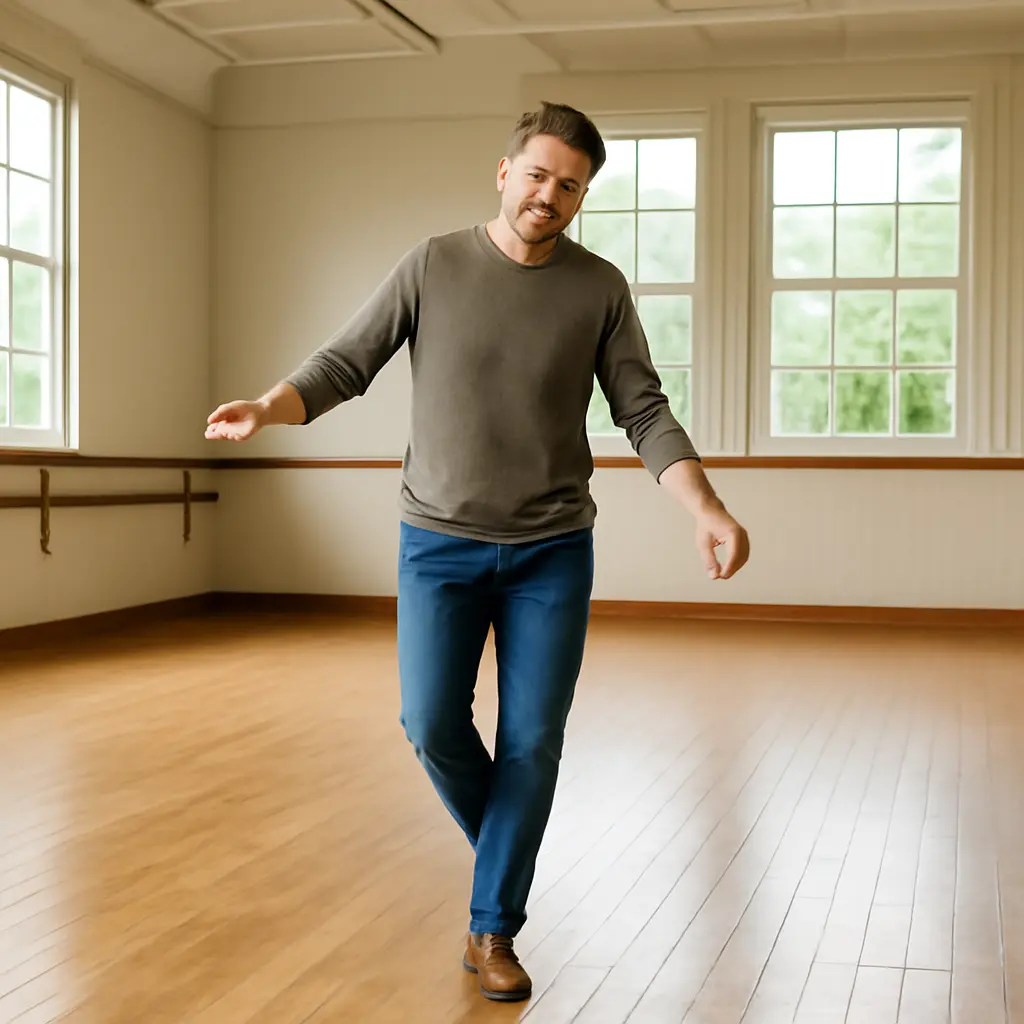
Dancing without overthinking means shifting attention away from judging or planning every movement and toward the sensations, rhythm, and impulses of the body. That shift can make dance feel more absorbing and enjoyable, while offering a practical way to explore movement without treating it as a performance. Research on music, movement, attention, and exercise supports several potential benefits, although dancing is not a guaranteed treatment for stress or a substitute for professional care. Understanding how attention changes the experience, what may happen emotionally and physically, and how to begin safely helps explain why letting the body lead can feel different.
Letting the body lead changes how dance feels
Overthinking during dance often means monitoring appearance, rehearsing the next step, or criticizing mistakes while moving. Letting the body feel the dance does not mean switching off thought completely. It means giving more attention to immediate sensory information—such as the beat, balance, breath, and muscle movement—than to imagined judgment or perfect execution.
Psychologist Mihaly Csikszentmihalyi described “flow” as a state of deep involvement in an activity, often marked by focused attention and reduced self-consciousness. Dance may create conditions that support flow when the challenge feels manageable and the dancer is engaged in the movement. Flow is not guaranteed, and it should not be confused with losing awareness of surroundings or ignoring pain.
The scale of dance participation also shows why accessible approaches matter. The World Health Organization’s 2020 guidelines recommend that adults accumulate 150 to 300 minutes of moderate-intensity aerobic activity, or 75 to 150 minutes of vigorous activity, each week. Dancing can contribute to physical activity when its intensity and duration are sufficient; the amount of exercise varies substantially by style, pace, and individual effort.
From self-monitoring to present-moment attention
Self-monitoring is the act of evaluating one’s actions while they are happening. In dance, a little monitoring can help with safety or learning a sequence, but constant internal commentary—“Do I look awkward?” or “Which foot comes next?”—can compete with attention to music and movement. A simple sensory cue, such as noticing the feet contacting the floor, can redirect attention without demanding that thoughts disappear.
Flow, play, and improvisation
Improvisation is movement created in the moment rather than copied from a fixed sequence. It can make dance feel more exploratory because there is no single choreography to reproduce. Flow may occur when a dancer’s skills and the task’s challenge feel reasonably balanced, but people can also enjoy brief, playful movement without entering a formal psychological state.
Body-led dancing can support mood and connection
When attention moves from evaluation to sensation, some dancers experience greater ease, enjoyment, or emotional expression. These outcomes are plausible and reported in dance research, but effects depend on the person, setting, music, and type of activity. The evidence does not mean that one dance session will reliably resolve anxiety, depression, or other health concerns.
Mood and stress: promising, but not a cure
A 2019 meta-analysis by Karkou and colleagues in The Arts in Psychotherapy reviewed randomized controlled trials of dance movement therapy for adults with depression. The authors reported evidence of reduced depressive symptoms, while also noting limitations in the number and quality of studies. Dance movement therapy is a structured therapeutic practice delivered by trained professionals; it is not the same as casual dancing at home.
For everyday dancing, a more cautious conclusion is appropriate: moving to music may provide enjoyable activity and a temporary change of focus, and some people find it emotionally releasing. If distress is persistent or severe, dance can be an optional complement to—not a replacement for—appropriate mental-health support.
Social rhythm and shared attention
Group dance adds coordination with other people, shared music, and a sense of participation. In a 2016 study published in Proceedings of the National Academy of Sciences, researchers reported that synchronized movement was associated with increased pain thresholds and social closeness among participants. The study examined specific experimental conditions, so it should not be treated as proof that every group dance produces the same effects. Still, it illustrates how moving together can involve social as well as physical experience.
Dance engages the body through movement and music
Dance combines muscular effort, balance, coordination, and responses to sound. The body’s experience depends on the movement: a slow sway differs from a fast, vigorous routine, and neither has one universal physical effect. Letting sensation guide movement can help a dancer notice effort and adjust intensity, but it does not replace basic precautions or individual medical advice.
Movement, balance, and physical activity
Dance can involve repeated steps, changes of direction, weight shifts, and coordination between body parts. Depending on intensity, it may count toward aerobic activity recommendations. The U.S. Centers for Disease Control and Prevention advises adults to include muscle-strengthening activity on at least two days per week as well as aerobic activity; dancing may support movement and fitness, but it may not meet every person’s full strength-training needs.
A practical measure is the talk test: during moderate-intensity activity, a person can generally talk but not sing comfortably, according to the CDC’s physical-activity guidance. This is only a rough guide. People returning to exercise, living with a health condition, or experiencing pain or dizziness should adapt activity and seek qualified advice when needed.
Music, rhythm, and sensory feedback
Music provides timing cues that can help organize movement. A dancer may attend to the pulse, melody, bass, or changes in volume, then respond with steps, gestures, or stillness. Focusing on one musical feature can be an easy alternative to judging whether a movement looks impressive.
Sensory feedback also includes noticing breathing, balance, warmth, and muscular effort. These cues can help distinguish a satisfying challenge from strain. The goal is not to force a dramatic emotional experience; it is to remain responsive to what the body is communicating.
Simple practices help quiet dance-related overthinking
There is no single correct way to stop overthinking. A useful approach is to reduce performance pressure, choose a manageable movement task, and return attention to a concrete sensation whenever self-criticism takes over. These practices can be used alone, in a class, or in a social setting.
Try a short, low-pressure movement session
- Choose one or two songs that feel inviting, and clear enough space to move safely.
- Begin with comfortable movements, such as shifting weight, swaying, or stepping in place.
- Pick one anchor: the beat, the feet on the floor, the movement of the arms, or the breath.
- When judgment appears, notice it without arguing with it, then return attention to the chosen anchor.
- Pause or reduce intensity if movement causes pain, unusual shortness of breath, dizziness, or distress.
Choose a dance form that fits the moment
Free-form dancing suits people who want room to improvise, while a beginner class can offer structure and gradual skill-building. Social dancing adds interaction; seated dance can make movement more accessible for some people; and guided dance movement therapy has a therapeutic framework. These forms are related but not interchangeable, and dancers should choose based on preference, access, ability, and purpose.
Make safety part of body awareness
Listening to the body includes noticing limits, not pushing through every sensation. Wear footwear and clothing appropriate to the surface and style, keep the space clear, and build intensity gradually. If a movement feels unsafe, modify it or stop. People with injuries or relevant medical conditions can ask a health professional about suitable activity.
Conclusion: feel the movement without demanding perfection
Stopping overthinking in dance is less about silencing the mind than changing what receives attention. Present-moment focus can make room for improvisation and flow; dance may support enjoyment, physical activity, and social connection; and the effects depend on context and individual experience. Research on dance-based therapy is encouraging for some outcomes, but it does not establish dance as a universal treatment.
Start with one song, one comfortable movement, and one sensation to notice. Let the movement be modest, imperfect, and responsive. For further guidance, explore public-health physical-activity recommendations or seek a qualified dance or movement professional whose approach fits your needs.
Sources: World Health Organization, WHO Guidelines on Physical Activity and Sedentary Behaviour, 2020, https://www.who.int/publications/i/item/9789240015128; Karkou, V., Aithal, S., Zubeyir, S., and Meekums, B., “Effectiveness of dance movement therapy in the treatment of adults with depression: a systematic review with meta-analyses,” The Arts in Psychotherapy, 2019, https://doi.org/10.1016/j.aip.2019.101592; Tarr, B., Launay, J., Cohen, E., and Dunbar, R., “Synchrony and exertion during dance independently raise pain threshold and encourage social bonding,” Proceedings of the National Academy of Sciences, 2016, https://doi.org/10.1073/pnas.1514452113; U.S. Centers for Disease Control and Prevention, Adult Activity: An Overview, https://www.cdc.gov/physical-activity-basics/guidelines/adults.html; Csikszentmihalyi, M., Flow: The Psychology of Optimal Experience, Harper & Row, 1990.