
Recovery routines are the practices that help your body and mind return toward baseline after exercise, demanding work, or a poor night’s sleep. The most useful routine is not the most elaborate one: it prioritizes enough sleep, appropriate food and fluids, and movement scaled to how you feel. The Centers for Disease Control and Prevention recommends adults get at least seven hours of sleep a night, while the American College of Sports Medicine emphasizes that recovery needs vary with training load, health, and individual response. Below, we’ll cover what recovery means, how to build a practical post-exercise routine, how to adjust it for different kinds of fatigue, and when persistent symptoms call for professional advice.
Recovery routines: the attributes that help you move tomorrow
A recovery routine is a repeatable set of actions that supports readiness for the next bout of physical or mental effort. The National Strength and Conditioning Association describes recovery as the restoration of physiological and psychological processes so a person can train or perform again. In practice, it means matching the response to the stress: an easy walk after a hard workout may help you feel less stiff, while a very hard workout may call for rest, food, and sleep instead of more training.
Recovery is not a single treatment or a guarantee against soreness. It is a combination of sleep, nutrition, hydration, rest, and appropriately dosed activity. Delayed-onset muscle soreness commonly develops after unfamiliar or strenuous exercise and often peaks within 24 to 72 hours, according to the American College of Sports Medicine. A plan that lets you move comfortably the next day therefore focuses on function and gradual return—not on eliminating every sensation of fatigue.
Sleep and rest support recovery routines
Sleep is the foundation of recovery because it supports normal physical and cognitive functioning. The CDC recommends at least seven hours per night for adults aged 18 to 60, and notes that sleep quality matters alongside duration. People who train heavily, work shifts, or are catching up after a short night may need more time in bed, but individual needs differ.
A consistent sleep schedule
A consistent schedule means going to bed and waking at roughly the same times each day. Regular timing can make it easier to protect adequate sleep, especially when training or work demands change. Keep the bedroom dark, quiet, and comfortably cool, and leave enough time to wind down. If pain, breathing problems, or persistent insomnia repeatedly disrupt sleep, discuss the issue with a healthcare professional rather than relying on supplements or intense training to compensate.
Rest days and training-load management
A rest day reduces training stress enough to allow adaptation and restore readiness. It does not have to mean staying completely still: gentle daily activity can be appropriate if it feels comfortable. The World Health Organization recommends that adults do 150 to 300 minutes of moderate-intensity aerobic activity, or 75 to 150 minutes of vigorous activity, per week, alongside muscle-strengthening activity on at least two days. Those are general health targets, not a requirement to train through pain or fatigue. Increase workload gradually, and make the next session easier or postpone it when normal movement feels unusually difficult.
Food and fluids make recovery routines practical
Nutrition and hydration replenish resources used during activity, but the right amount depends on exercise duration, intensity, climate, and personal needs. The International Olympic Committee’s consensus statement on sports nutrition emphasizes that athletes should tailor intake to the demands of their sport and training. For most everyday workouts, a balanced meal and drinking to thirst are more useful than complicated recovery products.
A meal with protein and carbohydrates
Protein supplies amino acids used in tissue repair, while carbohydrates help restore muscle glycogen, the stored fuel used during exercise. A recovery meal can combine a protein source—such as eggs, yogurt, beans, tofu, fish, or poultry—with carbohydrate-rich foods such as rice, potatoes, oats, fruit, or bread. The International Society of Sports Nutrition reports that total daily protein intake and its distribution across meals are important considerations for people who exercise; needs vary with body size, training, and health. There is no need to rush a shake immediately after every session if a regular meal is available soon.
Hydration without overdoing it
Hydration means replacing fluid losses without drinking excessively. Water is generally sufficient for short, moderate sessions. Longer or hot-weather exercise can increase fluid and electrolyte losses, so a person may need more deliberate replacement, particularly after heavy sweating. The National Athletic Trainers’ Association advises individualizing hydration strategies and cautions that excessive fluid intake can be dangerous. Thirst, conditions, and the duration of exercise are useful context; do not force large volumes of water to meet a fixed target.
Active recovery and mobility help you move comfortably
Active recovery is low-intensity movement performed between harder efforts or on an easier day. Walking, gentle cycling, and relaxed mobility work are common examples. A 2018 review in the journal Frontiers in Physiology found that active recovery can influence short-term measures such as blood lactate, but evidence that it consistently improves next-day performance or prevents soreness is mixed. Use it because it feels helpful—not because it is guaranteed to speed tissue repair.
Easy movement rather than another workout
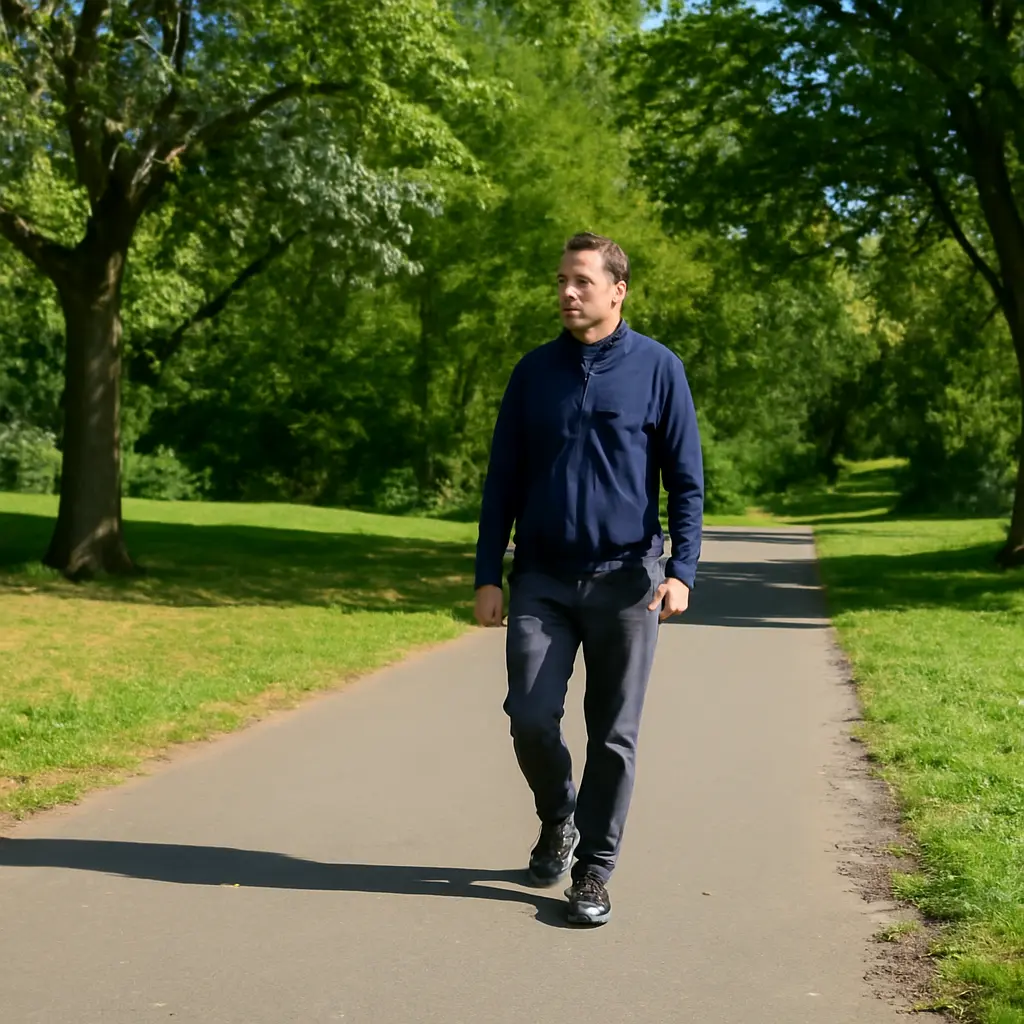
A useful active-recovery session should feel distinctly easier than training. Try a short, comfortable walk or light cycling, and stop if movement increases pain, dizziness, or unusual shortness of breath. The purpose is to maintain comfortable movement, not to turn a recovery day into another demanding session. If you feel worse as you go, rest instead.
Gentle mobility and stretching
Mobility work uses controlled movement through a comfortable range; stretching lengthens muscles and connective tissues. Both can support flexibility and make movement feel less restricted, but stretching is not a reliable way to prevent all exercise-related soreness. The CDC includes flexibility and balance activities as useful components of overall physical activity, especially for older adults. Keep stretches gentle, avoid bouncing into painful ranges, and treat sharp or worsening pain as a reason to stop.
Recovery routines should match the kind of fatigue
Not all fatigue comes from exercise. A demanding shift, emotional stress, travel, illness, and sleep loss can all reduce readiness. The National Institute for Occupational Safety and Health identifies long work hours and inadequate recovery time as factors that can contribute to fatigue, which can impair attention and performance. Recognizing the source helps you choose a response that is more useful than simply pushing harder.
After a hard workout
After strenuous exercise, cool down briefly if it feels comfortable, eat a normal meal or snack, replace fluids as appropriate, and prioritize sleep. The next day, choose easy movement or rest according to soreness and function. Mild, symmetrical muscle soreness can be a typical response to unfamiliar exercise; severe pain, marked swelling, significant weakness, or symptoms that worsen rather than improve deserve medical attention.
After a demanding workday or poor sleep
When fatigue is mainly mental or sleep-related, a demanding workout may add stress instead of restoring energy. Consider a walk, an easier training session, or a rest day, and return to your usual schedule when alertness and coordination feel normal. Avoid driving or operating equipment if you are dangerously sleepy. A brief break may help with immediate fatigue, but it does not replace adequate sleep.
A simple routine for tomorrow-ready recovery
The following routine is a starting point, not a medical prescription. Adjust it to your activity, health, climate, and how you feel:
- After exercise, spend a few minutes moving gently if that feels comfortable.
- Eat a balanced meal with a protein source and carbohydrate-rich foods when convenient.
- Drink according to thirst and the amount of fluid lost; avoid forcing excessive water.
- Protect a regular sleep window that allows at least seven hours for most adults.
- The next day, check how you move and feel before deciding between normal training, an easier session, or rest.
For example, after a weekend hike that leaves your legs mildly stiff, an easy walk, ordinary meals, and a full night’s sleep may be enough. If the same hike causes sharp pain or an altered walking pattern, skip the next hard session and seek professional guidance if symptoms persist or are severe. The distinction is important: soreness is not a scorecard for workout quality, and recovery should not require enduring pain.
Conclusion: build recovery routines around readiness
Recovery routines work best when sleep, rest, food, fluids, and gentle movement are treated as complementary tools rather than quick fixes. Sleep and training-load management establish the foundation; nutrition and hydration help meet the demands of activity; and active recovery or mobility can support comfortable movement when appropriately dosed. Match the routine to the source of fatigue, and use pain, function, and alertness—not pressure to complete a plan—as guides for the next day.
Start by choosing one practical change, such as protecting your sleep schedule or making the day after a hard session easier. If fatigue is persistent, symptoms are severe, or recovery does not improve despite reducing workload, consult a qualified healthcare professional. For further guidance, review the CDC’s sleep and physical-activity recommendations and the American College of Sports Medicine’s exercise resources.
Sources: Centers for Disease Control and Prevention, About Sleep, https://www.cdc.gov/sleep/about/index.html; World Health Organization, WHO Guidelines on Physical Activity and Sedentary Behaviour, https://www.who.int/publications/i/item/9789240015128; American College of Sports Medicine, Exercise-Induced Muscle Damage and Soreness, https://www.acsm.org/education-resources/trending-topics-resources/muscle-damage; International Olympic Committee, IOC Consensus Statement: Dietary Supplements and the High-Performance Athlete, https://bjsm.bmj.com/content/52/7/439; International Society of Sports Nutrition, Position Stand: Protein and Exercise, https://jissn.biomedcentral.com/articles/10.1186/s12970-017-0177-8; National Athletic Trainers’ Association, Position Statement: Fluid Replacement for the Physically Active, https://natajournals.org/doi/10.4085/1062-6050-52.9.02; Dupuy et al., An Evidence-Based Approach for Choosing Post-exercise Recovery Techniques to Reduce Markers of Muscle Damage, Soreness, Fatigue, and Inflammation: A Systematic Review With Meta-Analysis, Frontiers in Physiology, 2018, https://www.frontiersin.org/journals/physiology/articles/10.3389/fphys.2018.00403/full; National Institute for Occupational Safety and Health, Work Schedules: Shift Work and Long Work Hours, https://www.cdc.gov/niosh/topics/workschedules/.